The success of a legislative agenda rarely depends solely on the merits of the policy itself. In a modern political environment, public opinion acts as the invisible hand that guides legislative priorities and determines the political will of elected officials. Building public support is an exercise in strategic communication, community organization, and sustained engagement. It requires moving beyond the technical jargon of a bill to find a narrative that resonates with the daily lives of the electorate. When a policy is perceived not just as a legal change but as a solution to a widespread societal challenge, it gains a level of momentum that is difficult for lawmakers to ignore.
1. Framing the Narrative with Emotional Resonance
The first step in building public support is translating complex legislative language into a compelling narrative. Lawmakers respond to pressure from their constituents, and constituents respond to stories. A legislative agenda must be framed in a way that highlights the human impact of the proposed changes. Instead of focusing on the intricacies of a tax credit or a regulatory adjustment, advocates should focus on the “why”—how the policy will improve public safety, lower the cost of living, or protect the environment.
Effective framing also involves identifying the values that underpin the agenda. Whether the focus is on fairness, economic opportunity, or individual liberty, connecting the policy to shared cultural values helps build a bridge between the policy experts and the general public. By creating a clear, simple, and emotionally resonant message, advocates can ensure that their agenda is easily understood and shared across social and community networks.
2. Building Broad-Based and Diverse Coalitions
Legislative agendas gain significant credibility when they are supported by a diverse group of stakeholders. A coalition that includes “unlikely allies”—groups that do not traditionally work together—sends a powerful message to the public and to legislators that the proposed policy has broad utility. For example, a conservation bill supported by both environmental activists and local chamber of commerce leaders suggests a balanced approach that considers both ecology and economy.
Coalition building requires identifying stakeholders who have a vested interest in the outcome of the legislation. This includes community leaders, business owners, non-profit organizations, and academic experts. By bringing these groups together, advocates can pool resources, share messaging, and demonstrate a unified front. A broad coalition also helps insulate the agenda from claims of being a “special interest” initiative, framing it instead as a collective community priority.
3. Utilizing Data-Driven Content and Digital Strategy
In the information age, public support is often built through digital channels where the competition for attention is fierce. To cut through the noise, advocacy groups must produce high-quality, informative content that educates the public on the necessity of the legislative agenda. This involves the use of white papers, infographics, and explainer videos that break down complex data into digestible formats.
Effective advocacy requires a multi-layered approach to communication. For those operating at the intersection of policy and public opinion, utilizing professional content marketing in Washington DC allows for the creation of high-value educational resources that explain complex legislation in a way that resonates with both local residents and federal stakeholders. By deploying data-driven storytelling across social media and digital platforms, organizations can shape the public conversation and provide supporters with the facts they need to advocate for the cause.
4. Mobilizing Grassroots and “Grasstops” Support
Public support must be demonstrated through action to be effective. Grassroots mobilization involves engaging the general public to contact their representatives through emails, phone calls, and town hall attendance. This “bottom-up” approach shows legislators that there is widespread interest in the agenda among the people who vote for them. Digital tools have made grassroots mobilization more accessible, allowing supporters to sign petitions or send pre-written messages to their representatives with a few clicks.
Simultaneously, “grasstops” mobilization focuses on engaging influential community leaders—such as local mayors, prominent business leaders, or religious figures—who have direct access to lawmakers. When a legislator hears from both a thousand constituents and a handful of respected local leaders, the pressure to act increases significantly. Balancing these two approaches ensures that the legislative agenda has both the numbers and the influence required to move forward.
5. Engaging with Earned Media and Thought Leadership
To build mass-market support, an advocacy campaign must move beyond its own echo chambers and into the broader media landscape. Earned media—publicity gained through editorial influence rather than paid advertising—is essential for establishing the legitimacy of a legislative agenda. This is achieved through press releases, op-eds in major publications, and media appearances by subject matter experts.
Thought leadership plays a crucial role here. By positioning the architects of the legislative agenda as experts in their field, advocates can frame the public debate. When journalists and news outlets look for commentary on a particular policy issue, they should turn to the leaders of the movement. Consistent media presence helps keep the legislative agenda at the forefront of the public consciousness, ensuring it remains a priority for both the media and the politicians who follow it.
6. Hosting Community Events and Town Halls
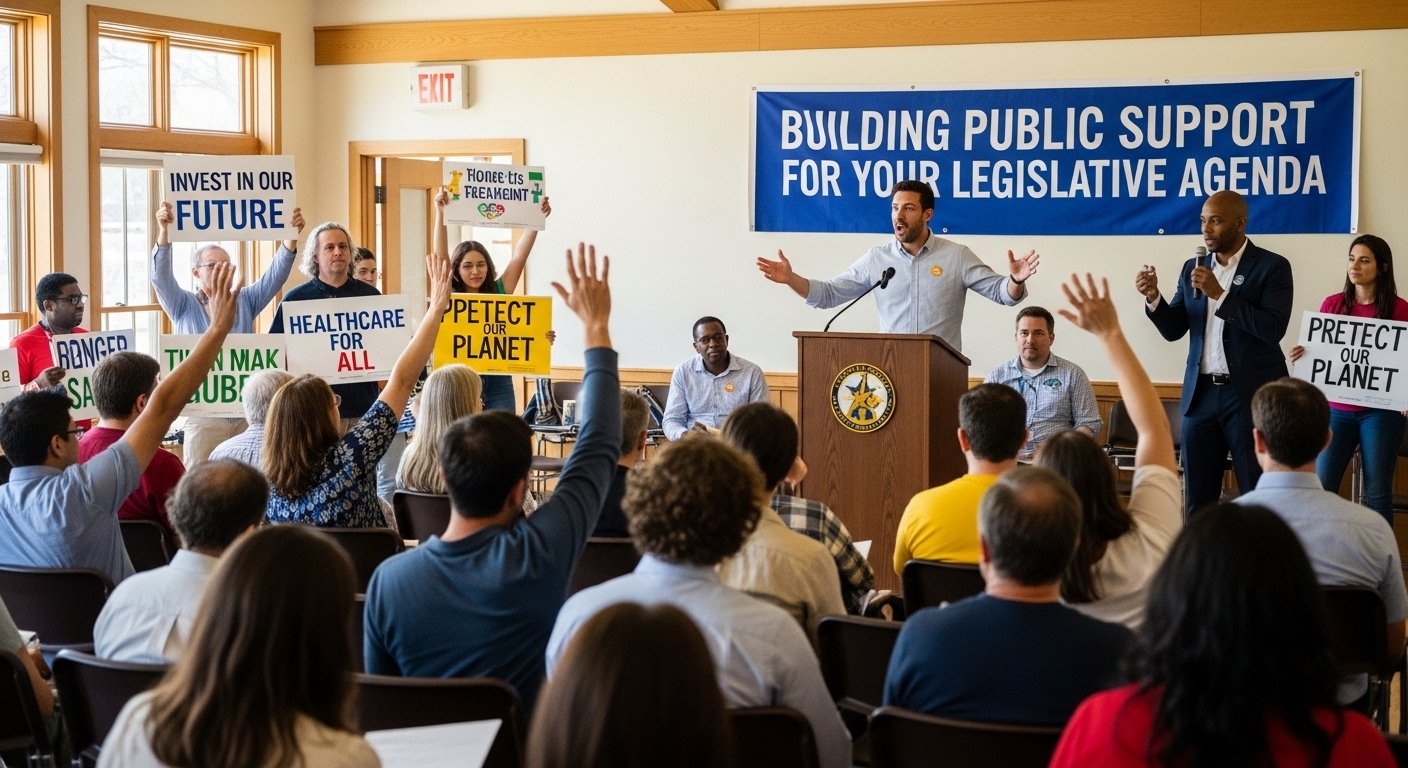
While digital advocacy is efficient, physical presence remains a powerful tool for building trust and support. Hosting town halls, community forums, and rallies allows advocates to hear directly from the people affected by the legislation. These events serve two purposes: they educate the community and they provide a platform for constituents to voice their support or concerns.
Community events also offer opportunities for local media coverage and content creation. A well-attended town hall provides visual evidence of public enthusiasm, which can be shared via social media to further build momentum. These interactions help “humanize” the legislative process, making the policy feel accessible and responsive to the needs of real people. It also allows advocates to refine their messaging based on the feedback and questions they receive from the public.
7. Maintaining Long-Term Momentum and Accountability
Building public support is not a one-time event; it is a marathon that continues until the legislation is signed into law—and often beyond. Legislative processes are notoriously slow, and public interest can wane if a campaign does not provide regular updates. Maintaining momentum requires constant communication about the progress of the bill, the hurdles being faced, and the next steps for supporters.
Accountability is the final piece of the puzzle. Advocates must keep the public informed about how their representatives are voting and where they stand on the agenda. By publicly celebrating supporters and highlighting those who oppose the policy, advocates create a political environment where supporting the legislative agenda is the most favorable path for the lawmaker. This long-term engagement ensures that the public remains a powerful ally from the initial drafting of the bill to its ultimate implementation.