
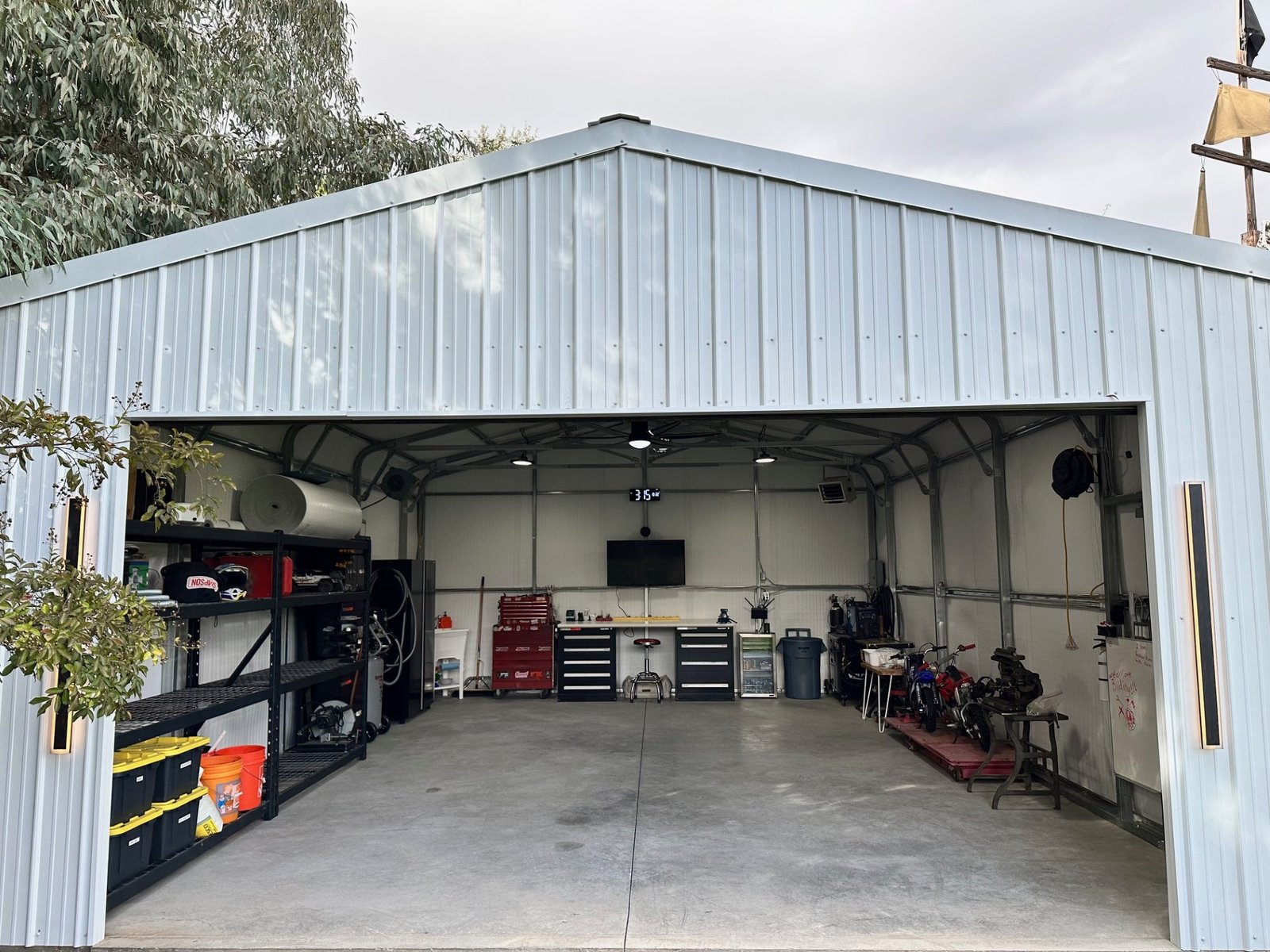
Preparing garage items for a move is often more complicated than packing standard household belongings as garages tend to store a wide variety of objects. Different tools, machinery, seasonal equipment, and chemicals require special handling. Three major challenges typically arise: handling bulky and irregularly shaped items, managing hazardous or restricted materials, and organizing cluttered and mixed storage.
1. Bulky items
Garages often contain bicycles, ladders, gardening tools, and power equipment that do not easily fit into standard boxes. These items can be heavy, awkward to carry, and difficult to secure during transportation. The least serious consequence is inefficient use of space in the moving vehicle, while the most serious risk is damage to the items themselves or injury during lifting. To mitigate these risks, it is advisable to partially disassemble items where possible, such as by removing wheels or detachable parts. Using protective wraps, straps, and custom-sized containers helps stabilize these objects. Proper lifting techniques and professional assistance from Edmonton movers further reduce risks.
2. Hazardous or restricted materials
Many garages store paints, solvents, fuels, batteries, and other chemicals that may be flammable or toxic. These materials may also be restricted by moving companies. The least serious consequence is inconvenience if these items cannot be transported and must be left behind. More serious consequences include safety hazards, such as leaks or spills, or even fire risks, during transit. The best solution is to identify and separate hazardous materials early in the process. Many of these items should not be moved and must instead be disposed of according to local regulations or used up before the move. For transportable materials, secure, sealed containers and proper labeling are essential.
3. Disorganization
Garages often become storage areas for rarely used or forgotten belongings, resulting in clutter and a lack of organization. During a move, this can lead to confusion, misplaced items, or the unnecessary transport of objects that are no longer needed. Minor consequences include wasted time during packing and unpacking, while more significant issues include increased moving costs and inefficiency. To address this, a sorting process should be completed before packing begins. Items should be grouped into categories such as keep, donate, recycle, or discard. Clearly labeled boxes and an inventory system help maintain order and simplify unpacking at the new location.
Overall, careful planning, proper handling techniques, and systematic sorting can effectively manage these difficulties, ensuring a safer and more efficient relocation process.