
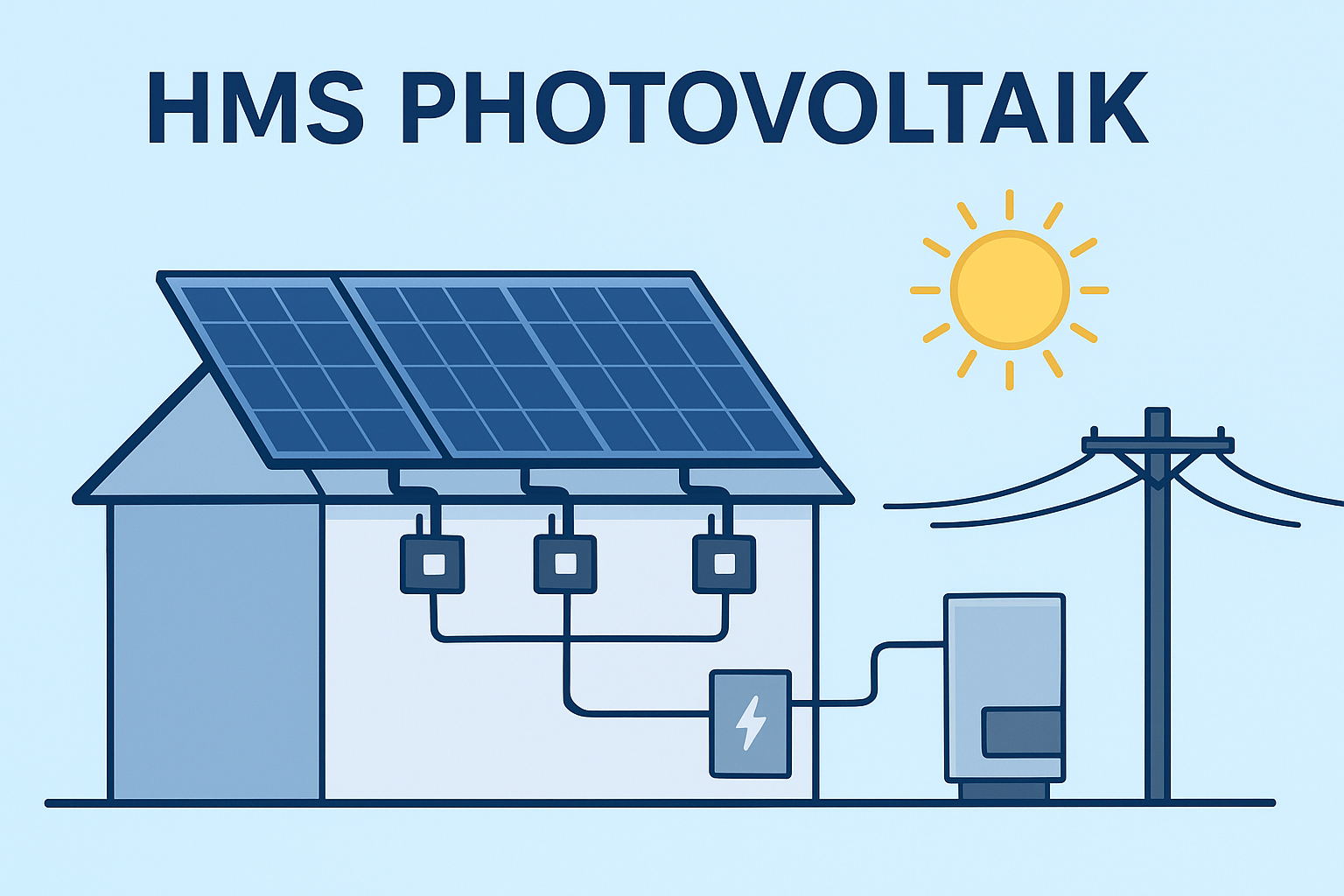
As renewable energy continues to grow globally, solar technology has become one of the most accessible ways to generate clean electricity. Among the innovations in this field, HMS Photovoltaik has gained attention for its smart design, efficiency, and suitability for residential and commercial solar setups. HMS systems are typically associated with photovoltaic microinverters, offering a reliable method to convert DC power from solar panels into AC power used in homes.
What is HMS Photovoltaik?
HMS Photovoltaik refers to a series or concept of microinverter-based photovoltaic systems. Instead of using a single central inverter, HMS setups connect microinverters to each solar panel individually, allowing greater flexibility and power optimization. This means each panel works independently — improving performance even when one panel is shaded or dirty.
How HMS Microinverter Technology Works
-
Solar panels collect sunlight
Photovoltaic cells absorb solar energy and produce direct current (DC). -
Microinverters convert DC to AC
Each panel sends DC power to its own HMS microinverter, which transforms it into AC electricity. -
Power flows into the electrical grid or home system
AC power can be used immediately, stored via batteries, or fed back to the grid for credits depending on government regulations.
Key Features of HMS Photovoltaik
-
Panel-Level Optimization
Every panel outputs its maximum potential without being limited by weaker panels. -
Scalable Design
Start with a few panels and expand the system later without replacing equipment. -
Safety and Reliability
Low voltage per unit reduces fire risk and simplifies troubleshooting. -
Higher Energy Yield
Better performance in partial shade or cloudy environments. -
Smart Monitoring
Many HMS systems support app- or cloud-based tracking of energy data in real-time.
Advantages Over Traditional String Inverters
| Feature | HMS Photovoltaik (Microinverter) | Traditional Inverter |
|---|---|---|
| Panel Independence | ✔ Yes | ✖ No |
| Expandability | ✔ Easy to scale | ⚠ Limited |
| Shading Loss | Low | High |
| Monitoring | Panel-level | System-level only |
| Maintenance | Simple | More complex |
Microinverters generally offer better efficiency and flexibility, making them ideal for residential rooftops where shade, roof angles, or limited space are common challenges.
Where HMS Photovoltaik is Best Used
-
Houses with multiple roof faces or irregular layouts
-
Installations where panels may face different directions
-
Regions with partial shading from trees or buildings
-
Users who want detailed performance monitoring
-
Solar owners planning to expand capacity in the future
Whether for a home, small business, or an off-grid cabin, HMS microinverter systems deliver consistent performance and long-term return on investment.
Future of HMS Photovoltaik and Solar Energy
With increasing demand for sustainable energy sources, HMS-based photovoltaic systems will continue to evolve. As microinverters become more efficient and affordable, adoption will accelerate, helping more users transition to clean power.
The next stage of solar technology may include:
-
AI-enhanced energy management
-
Higher-efficiency microinverter chips
-
Integrated battery and EV charging compatibility
-
Improved heat management systems
This makes HMS Photovoltaik a significant part of the renewable energy landscape.
Conclusion
HMS Photovoltaik stands out as a modern, efficient, and flexible solar power solution. By maximizing output at the panel level and simplifying system expansion, microinverter-based photovoltaics represent the future of distributed solar energy. For homeowners and businesses looking for long-term sustainability and performance, HMS systems are a forward-thinking investment.