
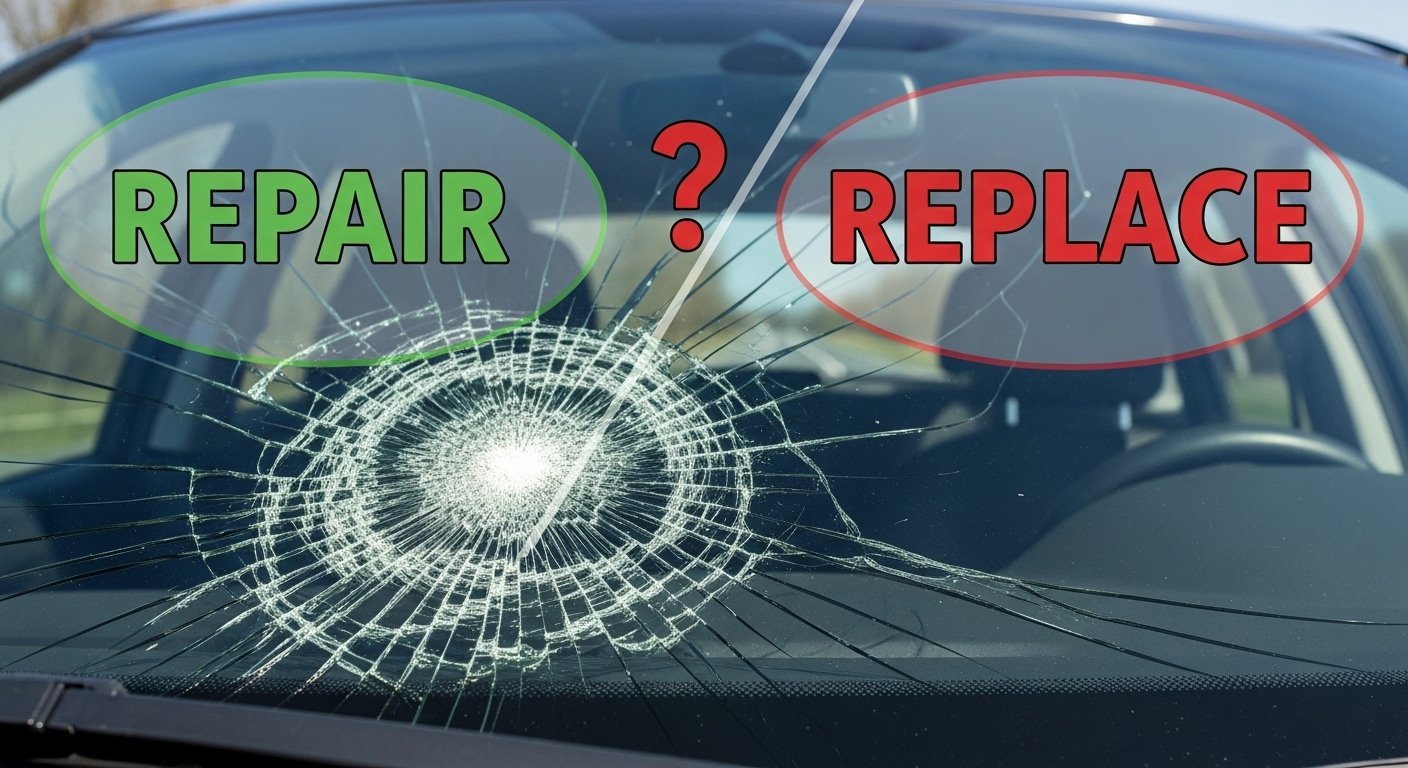
A chip or crack in your windshield always seems to appear at the worst possible time — and the first question most drivers ask is whether they need to replace the whole thing or whether a simple repair will do. The answer depends on more factors than most people realize, and getting it right matters more than many drivers appreciate.
Why the Decision Matters
A windshield is not simply a piece of glass — it is a structural component of your vehicle. In a rollover accident, it provides up to forty percent of the cabin’s structural integrity. In a frontal collision, it acts as a backstop for the passenger-side airbag, ensuring it deploys correctly toward the occupant rather than outward through a compromised glass surface. A windshield that has been improperly repaired — or that should have been replaced but was not — can fail at the moment it is needed most.
Getting the repair-versus-replacement decision right is therefore not just a matter of cost or convenience. It is a genuine safety consideration that deserves careful attention.
When Repair Is the Right Choice
Windshield repair is a process in which a clear resin is injected into the damaged area under vacuum pressure, filling the void left by the chip or crack and bonding the glass back together. When performed correctly on appropriate damage, it restores the structural integrity of the glass, prevents the damage from spreading, and produces a result that is virtually invisible to the casual observer.
Repair is the appropriate choice when the damage meets all of the following criteria.
Size
The size of the damage is the most fundamental factor in determining repairability. As a general guideline, chips smaller than a quarter in diameter and cracks shorter than three inches in length are candidates for repair. Many professional technicians work with slightly different size thresholds depending on the tools and resins they use, but damage significantly beyond these dimensions is generally not repairable to a standard that restores adequate structural integrity.
Location
Where the damage is located on the windshield is as important as how large it is. Damage that falls within the driver’s primary line of sight — the area directly in front of the steering wheel — is generally not a candidate for repair, even if it is small. This is because even a perfectly executed repair leaves a slight optical distortion that can interfere with the driver’s vision in critical moments. Damage in this zone is almost always better addressed with a full replacement.
Damage that extends to the edge of the windshield is similarly problematic. Edge cracks compromise the seal between the glass and the vehicle frame and tend to spread rapidly, making repair both less effective and less durable than replacement.
Depth
A windshield consists of two layers of glass bonded together by a plastic interlayer — typically polyvinyl butyral — that holds the glass together in the event of a break. Damage that has penetrated through both layers of glass to the interlayer is generally not repairable and requires replacement. A technician can assess the depth of damage during an initial inspection.
Age and Contamination
Damage that has been present for an extended period — or that has been exposed to dirt, moisture, or cleaning products — is more difficult to repair effectively. Contaminants that have worked their way into the crack or chip interfere with the bonding of the repair resin, reducing the quality and durability of the finished repair. Fresh damage that has not been exposed to the elements produces the best repair outcomes, which is why addressing windshield damage promptly rather than waiting is always the better approach.
When Replacement Is the Only Option
Replacement becomes necessary when the damage does not meet the criteria for repair — when it is too large, too deep, in the wrong location, or too contaminated for a repair to restore adequate structural integrity. It is also the appropriate response when damage affects the areas of the windshield that contain embedded technology — including rain sensors, heads-up display projection areas, and the heating elements in some windshields — where repair could interfere with the correct functioning of these systems.
Modern windshields are increasingly complex components that may incorporate advanced driver assistance system cameras and sensors mounted to or calibrated against the glass. When a windshield containing these systems is replaced, recalibration of the associated systems is a required step — not an optional add-on — to ensure that lane departure warning, automatic emergency braking, and other safety-critical systems continue to function correctly after the new glass is installed.
The Cost Consideration
Repair is almost always significantly less expensive than replacement — and in many cases, it is covered in full by comprehensive auto insurance without affecting the policyholder’s deductible. This makes prompt repair of eligible damage not just the structurally sound choice but the financially sensible one.
Delaying a repair to save money frequently backfires. Small chips and cracks expand — accelerated by temperature fluctuations, road vibration, and the pressure changes that occur when car doors are slammed — and damage that was repairable when it first appeared can become a replacement situation within days or weeks if left unaddressed.
Drivers dealing with windshield damage and seeking auto glass service in Kaysville, Utah, should have their damage assessed by a qualified technician as soon as possible — both to determine whether repair is still an option and to prevent further spreading that could turn a minor repair into a full replacement.
Conclusion
The choice between repairing and replacing a damaged windshield is not always obvious — but it is always worth getting right. A qualified auto glass technician can assess your specific damage quickly and give you a clear, honest recommendation that prioritizes both your safety and your budget.