Occasionally, we see cases that have had previous treatment, retreatment, and apicoectomy, often times many decades ago, and now require intervention. The prognosis on these cases is often guarded at best, and it is great that we have dental implants as an option. If a tooth has a fractured root or is in poor restorative or periodontal condition, I generally recommend a dental implant.
However, there are some select cases, and select patients, where there are some alternatives. I have a few such cases where I have elected to retreat a case with previous apicoectomy, and have had success without redoing the apicoectomy. This is usually necessary where the entire canal system or chamber is contaminated, or there are missed canals that can be addressed. In fact, a missed canals, or a leaking restoration are the most common reasons for apicoectomy failure. I will save those cases for a future post, and instead show a couple cases where it was decided to “re-apico” the tooth.
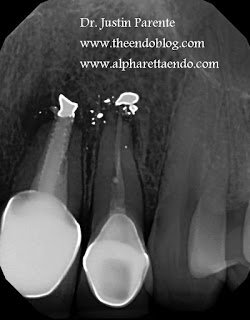
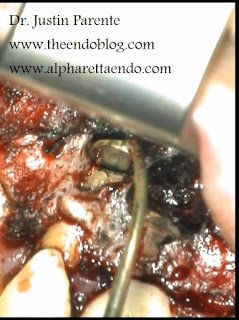
This first patient suffered a traumatic sports injury 30 years ago to her anterior teeth. The original root canal treatment was done at that time. The teeth had apicoectomies within a few years. The crowns on the teeth were recently redone, and a sinus tract was noticed soon after. As an aside, the appearance of apical pathology on a previously treated tooth only following a new restoration is a common trend. The most likely explanation is a lack of proper isolation during restorative care and a lack of seal in an old root canal treatment.
There was heavy amalgam tatooing of the buccal mucosa, but the patient was happy with the esthetics of her new crowns after many years of having crowns she considered ugly. I discussed treatment options at length, and ultimately referred her to a periodontist for implant consult and to learn about the alternative treatment. After discussing the option of implants with her periodontist, she came back to me to take a chance on redoing the apicoectomy. The sinus tract was only associated with #9, but upon access, a granuloma perforating the B plate of #8 was noted, and a decision was made to treat both teeth.